NightCap 2.0
85+ hotels and growing.
$
206,000
revenue in the first 2 months
656
reservations in the first 2 months
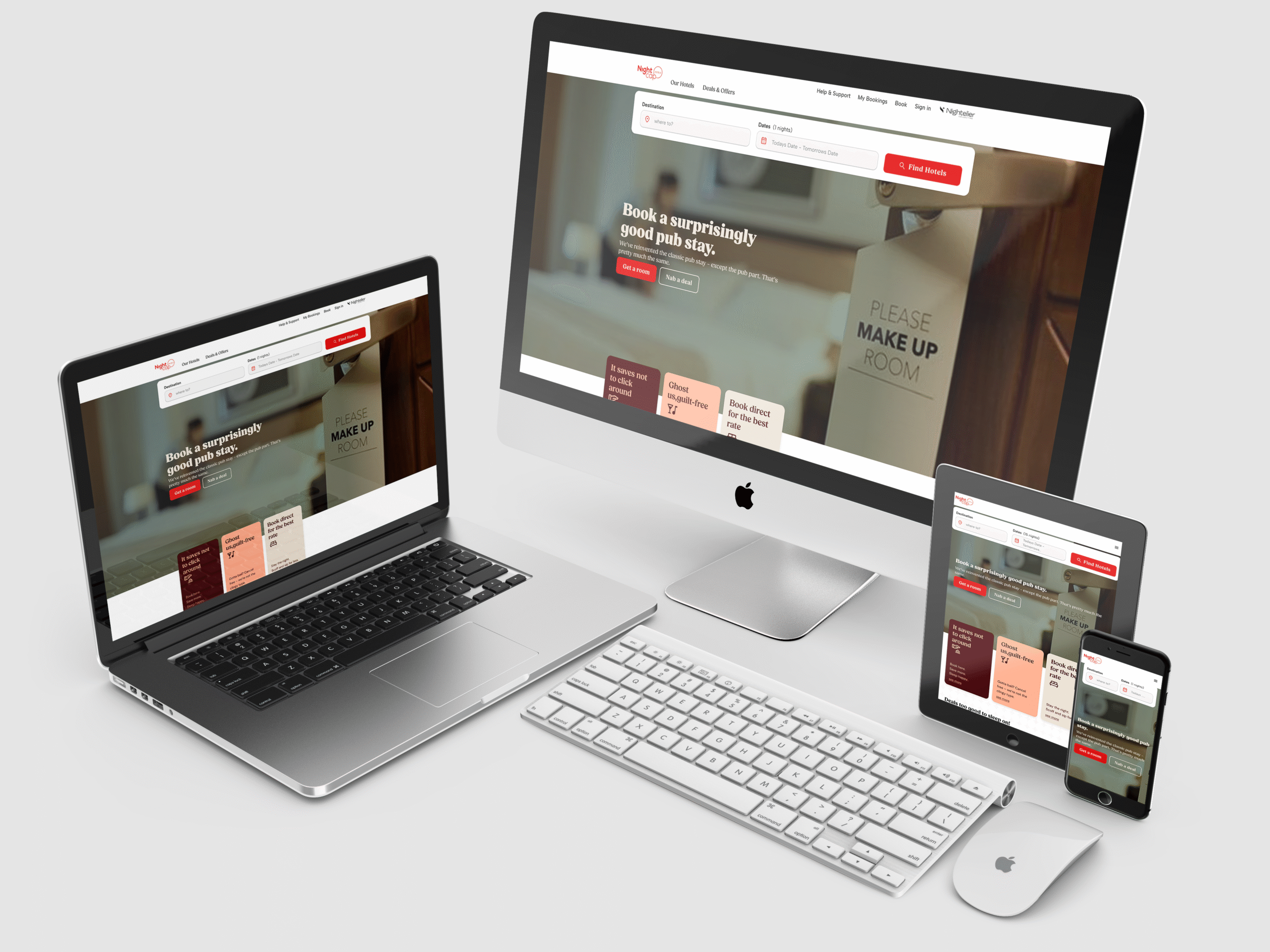

Project Overview
Role: Lead Product Designer ( UX UI designer )
Timeline: FY25 (Discovery → Build → Launch)
Venues supported: 85+ (scaling)
Business impact: +36.9% IRR, $2.1m profit over 5 years
Business Overview: The Nightcap Hotels is a network of affordable but quality accommodations launched back in 2018 and operated by ALH Group. The network consists of 85+ licensed venues all over Australia. The Nightcap hotels are segmented into 3 unique classifications – Nightcap Hotels, Nightcap Social and Nightcap Plus. All these classifications uses the Nightcap website to book accommodations in conjunction with the external channels like bookingDOTcom and Expedia. Our goal is to transform the accommodation booking system across digital different touch points to deliver a seamless experience for members.
The Challenges
A growing business held back by a broken guest experience.
The Process
Research & Insights
Method
- Competitive analysis (NightCap vs Booking.com vs Airbnb)
- Moderated research
- Data research & web analytics
- Defined our Missions
Logic
- Benchmark standards: Identify best practices and UX trends in the market.
- Find gaps: Spot missing features, usability issues, or opportunities to stand out.
- Boost conversions: Reduce friction in the booking flow and improve trust.
- Support decisions: Provide data-backed insights for design and product priorities.
- Stay current: Track evolving user expectations and competitor innovations.
Results
- Simplify booking flow: reduce steps from search to confirmation and improve calendar usability.
- Enhance search & filters: room type, view, amenities, accessibility, and breakfast options.
- Show pricing clearly: total cost upfront, including taxes, fees, and special offers.
- Add trust & transparency: guest reviews, ratings, secure payment, and cancellation policies.
- Optimise mobile & accessibility: smooth scrolling, one-tap booking, and ADA compliance.
- Improve room comparison & personalisation: compare amenities and recommend rooms or packages.
- Offer flexible booking options: pay now or later, free cancellation, and date changes.
- Visual storytelling & confirmation flow: immersive imagery, booking summaries, directions, and add-ons.
Strategy & Planning
Method
Collaborating with Delivery Leads and Project Managers, we conducted component block mapping and defined the information architecture, identifying similarities across brands. We also liaised with third-party teams to ensure seamless integration of external APIs, enabling a white-label design system that supported efficient reskinning, consistency, and scalability across multiple brands.
Logic
- Maintain consistent core functionality.
- Define which elements are customisable (logos, colours, content).
- Streamline development and deployment.
- Enable scalable onboarding for new partners.
- Ensure consistent UX and brand quality.
- Simplify testing, maintenance, and documentation.
Results
- Consistent user experience across all branded versions.
- Faster setup and deployment for new brands.
- Reduced development and maintenance costs through reusable components.
- Clear brand flexibility: easy to customise visuals and content without breaking structure.
- Improved performance and reliability due to shared, optimised codebase.
- Simplified updates: global changes roll out efficiently across sites.
- Better collaboration between design, dev, and client teams via clear documentation.
- Scalable growth: easier to expand into new markets or onboard new clients.
- Higher client satisfaction from a branded yet seamless experience.


Collaboration & Stakeholder Engagement
Method
- kickoff workshops & regular cadences: align goals across business, design, tech, and marketing.
- Gather requirements & feedback: capture needs and iterate on designs.
- Map user flows & journeys: ensure experiences meet user and business priorities.
- Coordinate cross-functional teams: manage dependencies and third-party integrations.
- Track risks & decisions: address issues early and prevent scope drift.
- Maintain brand consistency: ensure visuals, tone, and UX are cohesive.
Logic
- Shared vision: aligns business, design, tech, and user needs from the start.
- Clear communication: keeps everyone informed for faster decisions and fewer misunderstandings.
- Cross-team collaboration: leverages marketing, product, and dev expertise for better outcomes.
- User-focused design: ensures all input supports real user needs.
- Efficient workflow & buy-in: clarifies ownership, timelines, and keeps stakeholders engaged.
- Risk management: catches issues early to avoid surprises.
- Consistent brand experience: maintains cohesive tone, visuals, and UX across the platform.
Results
Project Pivot alert!
Project Pivot alert!
As Nightcap’s market strategy evolved, the project pivoted to include a second and third brand. Through close collaboration, the team white-labeled the site and implemented a design system, enabling efficient, consistent reskinning across brands while maximising reusable components and controlling costs.
Design & Delivery
Method
-
Discovery & Alignment – clarify goals, brand direction, and user needs.
-
Design System Integration – define scalable components and styles.
-
Wireframing to High-Fidelity – move from structure to polished visuals.
-
Collaboration & Handoff – work closely with devs for smooth implementation.
-
Testing & Iteration – review, refine, and update based on feedback
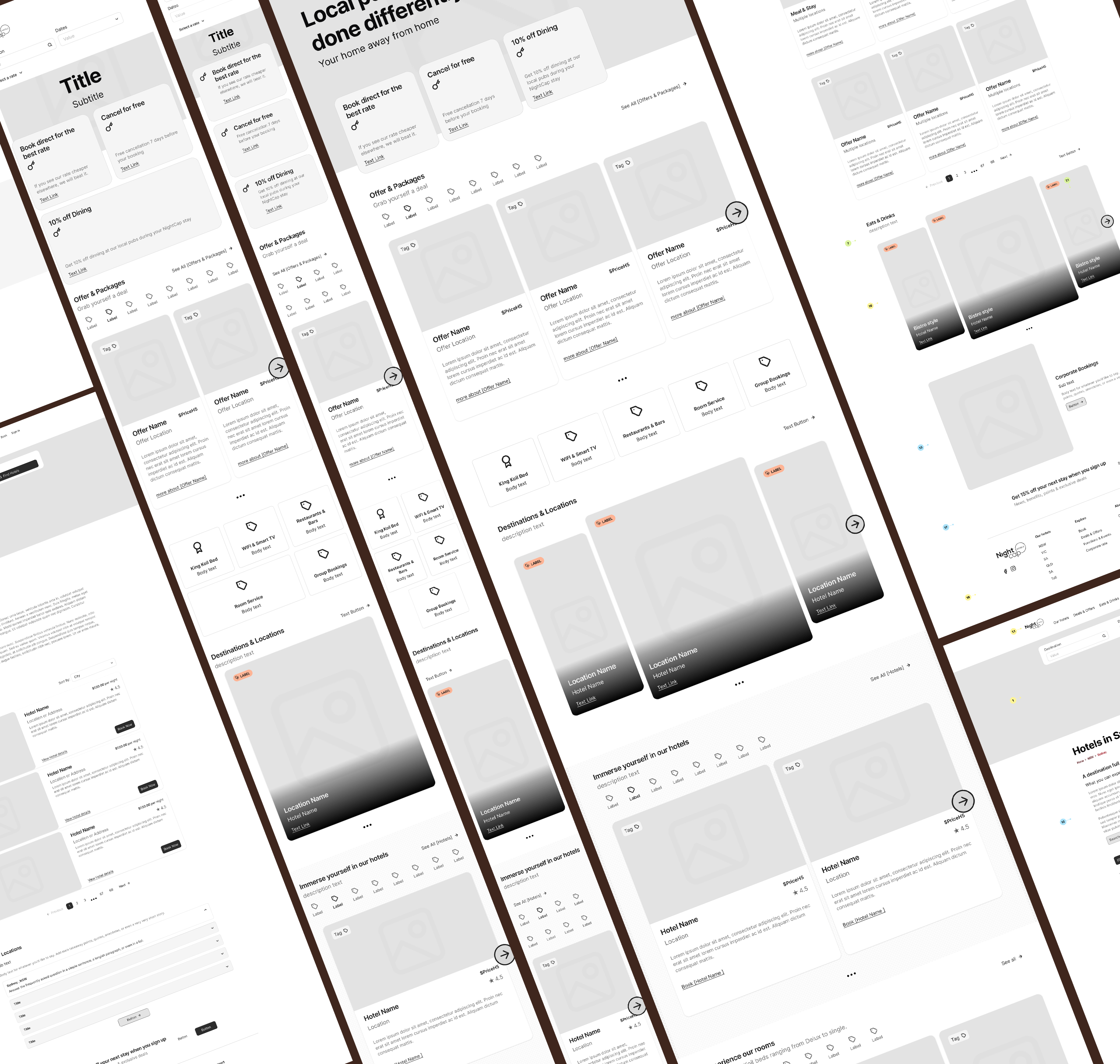
Wireframing Designing in NightCap multi-brand
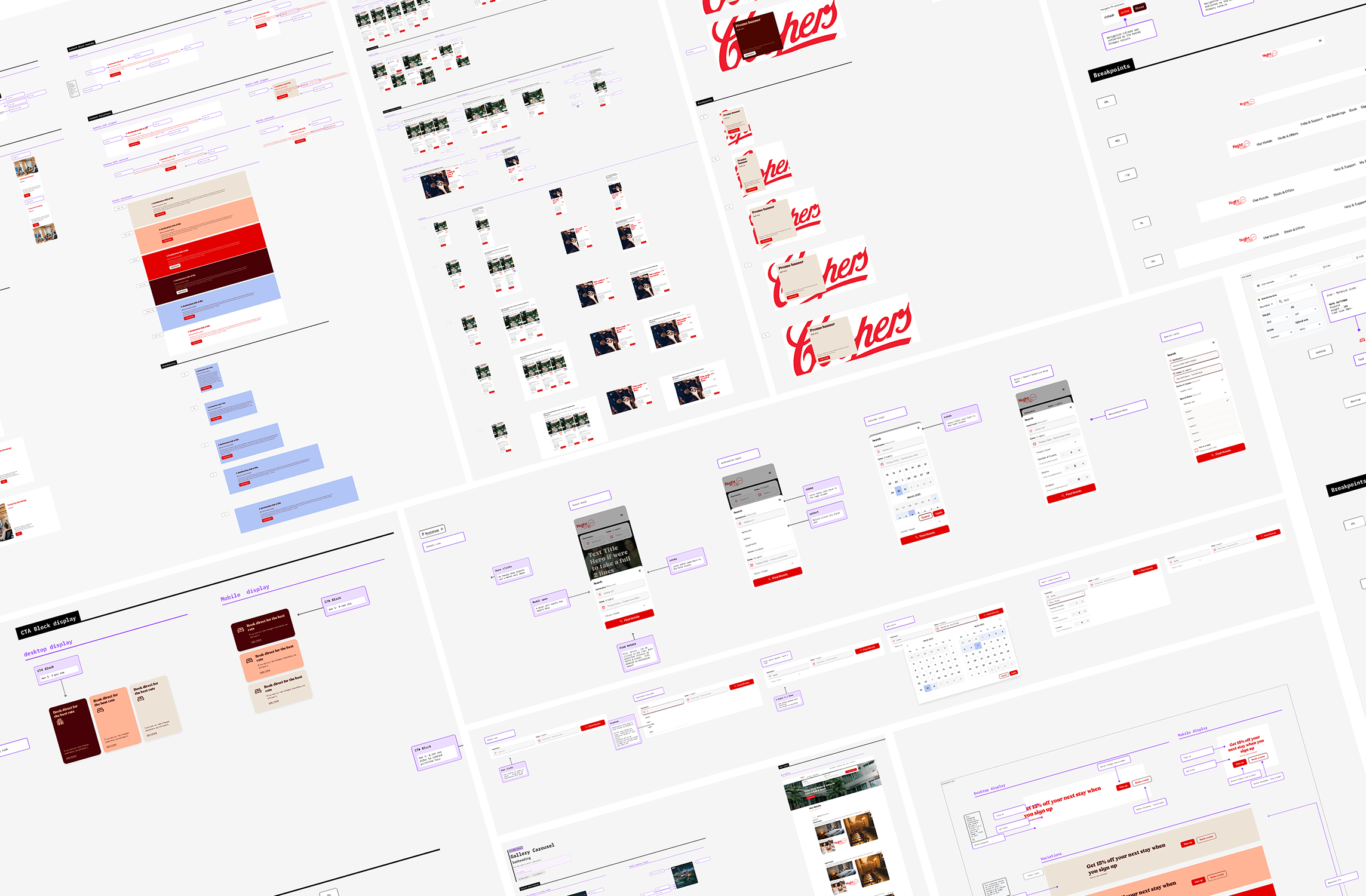
Component building in NightCap multi-brand
Outcomes
36.9
%
IRR +
656
reservations in the first 2 months
100
%
Platform ready to scale with 5+ venues/year and New Brands
$
206,000
revenue in the first 2 months
80
%
Improved conversion and guest trust
NightCap 2.0 was delivered as a white-label solution.
The platform was soft-launched in October 2025 with a flexible brand system that could be easily reskinned for additional brands. This enabled two additional brands to reuse the same set of components with minimal effort. By leveraging AEM, React, Storybook, and Supernova, we integrated the EDX multi-brand design system, allowing the site to be reskinned for different brand identities without rebuilding the core structure.
A third-party booking engine (Sabre) was seamlessly integrated into the front end, handling the majority of the booking process while maintaining a consistent, branded user experience. The backbone of this project was to uplift and simplify the booking experience for customers while enabling the Brand team to elevate content, campaigns, and messaging, driving further digital revenue.
Since launch (with limited traffic), the platform has generated $206K in revenue from 656 reservations. The launch also coincided with the name change of top-tier venues from NightCap Plus to Nightelier Collective, marking a key milestone in the brand’s digital evolution.
Reflection
Balancing business needs (profit, OTA cost reduction) with user needs (trust, ease, transparency).
What I’d do differently: test loyalty earlier, more guest workshops, explore personalisation.
Kudos


